
What’s in the Air Inside Your Home? Fragrances, Cleaning Products, and Your Skin
October 16, 2026
We tend to think about skincare in terms of what we put on our skin: cleansers, serums, moisturizers, and sunscreen. But what about everything our skin encounters throughout the day without us even thinking about it? From scented candles and air fresheners to household cleaning sprays and laundry products, our everyday environments expose us to a surprising number of substances. Could some of them be contributing to dry, irritated, or sensitive skin?
The answer depends on the substance, the type of exposure, and your individual skin. Not every household product is a problem, and there’s no need to panic about everything under your kitchen sink. But understanding how certain everyday products can affect your skin may help you identify potential irritants and make more informed choices.
Your Home May Be More Fragrant Than You Realize
Walk through your home and think about the products that add fragrance to your surroundings. Scented candles, plug-in air fresheners, room sprays, essential oil diffusers, perfumes, and fragranced cleaning products can all contribute to the mixture of substances in your indoor environment.
Fragrance is a particularly important consideration for people with sensitive skin. Certain fragrance ingredients can cause irritation or allergic contact dermatitis in susceptible individuals. These reactions may show up as redness, itching, flaking, or a rash. Sometimes the reaction appears where a product directly touches the skin; in other cases, airborne exposure may be relevant.
It’s important to distinguish between irritation and an allergy. Irritation can affect almost anyone under the right conditions, especially with repeated exposure. An allergic reaction involves the immune system and can develop even after someone has used a product without problems for a long time.
Does this mean you need to throw away every scented product you own? Not necessarily. If your skin feels comfortable and you aren’t experiencing symptoms, there’s no reason to assume fragrance is harming you. However, if you frequently experience unexplained irritation, simplifying your exposure to fragranced products may be a reasonable place to start.
Cleaning Products: Helpful for Your Home, Potentially Harsh on Your Skin
Household cleaners are designed to remove grease, grime, and dirt. Depending on their ingredients, some can also irritate the skin, particularly with repeated contact.
Strong cleaning solutions, disinfectants, solvents, and some detergents can disrupt the skin’s protective outer barrier. This barrier helps retain moisture and protects against external irritants. When it becomes compromised, skin may feel tight, rough, dry, or uncomfortable.
Even products you use regularly can become a problem if exposure is frequent enough. Think about washing dishes without gloves, cleaning bathrooms, handling laundry products, or using sprays in poorly ventilated spaces.
A few simple precautions can help:
- Wear appropriate protective gloves when handling cleaning products, following the product label.
- Avoid unnecessary direct skin contact with concentrated cleaners.
- Ventilate your home when using products that produce fumes or sprays.
- Wash accidental spills from your skin promptly, following the product’s safety instructions.
- Avoid mixing cleaning products, which can produce dangerous fumes.
Also, remember that an unpleasant smell doesn’t automatically mean a product is harmful, and a product with little or no smell isn’t automatically harmless. Ingredients and exposure matter more than scent alone.
Could Your Laundry Routine Be Affecting Your Skin?
Your clothes, towels, and bedding spend hours in contact with your skin. That makes laundry products worth considering if you experience recurring irritation.
Some laundry detergents and fabric softeners contain fragrances or other ingredients that may irritate sensitive individuals. Residue left on fabric may also be relevant for people who are particularly susceptible to irritation or contact allergies.
However, laundry detergent isn’t automatically the culprit whenever someone develops a rash. Skin conditions, fabrics, sweat, friction, and other personal-care products can also contribute.
If you suspect your laundry routine is involved, try a few simple changes:
- Choose a fragrance-free laundry detergent rather than one labeled only “unscented.”
- Consider temporarily skipping fabric softener and scented dryer sheets.
- Follow the detergent’s recommended dosage instead of assuming more is better.
- Try an additional rinse if residue seems to be a concern.
- Wash bedding, towels, and clothing regularly, especially if they become sweaty or come into contact with products that irritate your skin.
Make changes methodically rather than replacing everything at once. Keeping track of symptoms and when they occur can help you identify patterns.
Indoor Air Quality Matters, Too
The air inside your home contains more than oxygen and water vapor. Depending on your environment and activities, it may contain particles, dust, and chemicals released by cooking, cleaning, building materials, furnishings, and fragranced products.
Some cleaning sprays and fragranced products release volatile organic compounds (VOCs). Certain airborne pollutants can irritate the respiratory system, and research into air pollution suggests that some exposures may also contribute to oxidative stress, inflammation, and changes in the skin barrier.
Scientists are still investigating how different indoor exposures affect skin, and the effects vary depending on the substance, concentration, duration of exposure, and individual susceptibility. It would be misleading to say that ordinary household fragrances inevitably damage your skin or cause acne.
Still, a few sensible habits can improve your indoor environment:
- Open windows when outdoor conditions allow and ventilation is appropriate.
- Use exhaust fans when cooking or cleaning, where available.
- Consider reducing unnecessary air fresheners and fragranced sprays if you’re sensitive to them.
- Keep indoor spaces clean and address excessive dust or dampness.
- Consider a suitable air purifier if indoor particles are a concern.
These steps are about reducing unnecessary exposure, not creating a perfectly chemical-free home. That’s neither realistic nor necessary.
Is Your Skin Reacting to Something in Your Environment?
Environmental irritation can sometimes be confused with other skin concerns. Dryness, redness, itching, flaking, and discomfort may be associated with irritants or contact allergies, but they can also occur with eczema and other skin conditions.
Breakouts are even more complicated. Although environmental pollution is being studied for its potential relationship with acne, you shouldn’t assume that household fragrances or cleaning products are the cause of every pimple.
If you’re trying to work out what’s affecting your skin, start by paying attention to patterns.
Does irritation appear after cleaning? Does a rash develop beneath clothing or where a product touches your skin? Did symptoms begin after introducing a new detergent, fragrance, or skincare product? Does your skin improve when a suspected exposure is reduced?
A simple diary of products, activities, and symptoms can help you notice connections. Change one or two likely triggers at a time so you can better understand what makes a difference.
If symptoms persist, worsen, or repeatedly return, consult a healthcare professional or dermatologist. Patch testing may be appropriate when allergic contact dermatitis is suspected. Seek urgent medical care for symptoms such as difficulty breathing or swelling of the lips or tongue after an exposure.
Don’t Forget the Products You Put Directly on Your Skin
Your environment is only one part of the picture. Your skincare routine matters, too.
When skin is irritated, the instinct may be to scrub harder, add another active ingredient, or purchase an entirely new collection of products. But a complicated routine can sometimes make it more difficult to identify what’s bothering your skin.
Consider keeping things simple while you investigate possible triggers:
- Use a cleanser suited to your skin and avoid excessive washing or harsh scrubbing.
- Apply a moisturizer that helps support your skin’s protective barrier.
- Introduce new skincare products gradually.
- Use broad-spectrum sunscreen during the day.
- Avoid adding multiple new products at the same time when your skin is already irritated.
If you suspect a particular product is causing a reaction, stop using it rather than repeatedly testing it on irritated skin. Severe or persistent reactions deserve professional evaluation.
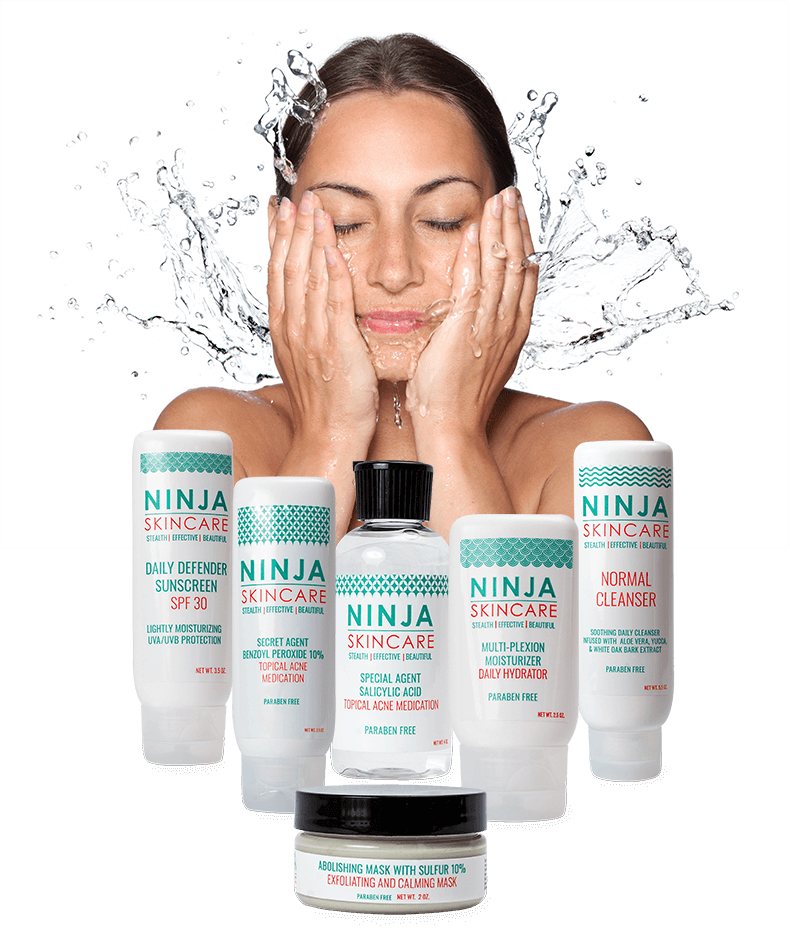
At Ninja Skincare, we believe understanding your skin is just as important as choosing the products you use. Skin history, daily habits, environmental exposures, and the products in your routine can all be useful pieces of the puzzle.
A Healthier Approach to Your Skin Starts With Awareness
You don’t need to eliminate every fragrance, replace every household cleaner, or worry about every ingredient listed on a label. The goal is to understand your skin, recognize possible triggers, and make thoughtful changes when something isn’t working for you.
Sometimes the most useful skincare adjustment isn’t adding another serum. It’s identifying an everyday product that irritates your skin, simplifying your routine, or giving your skin the support it needs to maintain its natural protective barrier.
Have questions about your skincare routine? Ninja Skincare offers personalized guidance to help you choose products based on your skin’s needs and history. Start with our free skin questionnaire, and take the guesswork out of building a routine that works for you.
 Get a ZERO obligation consultation with an acne-fighting Ninja!